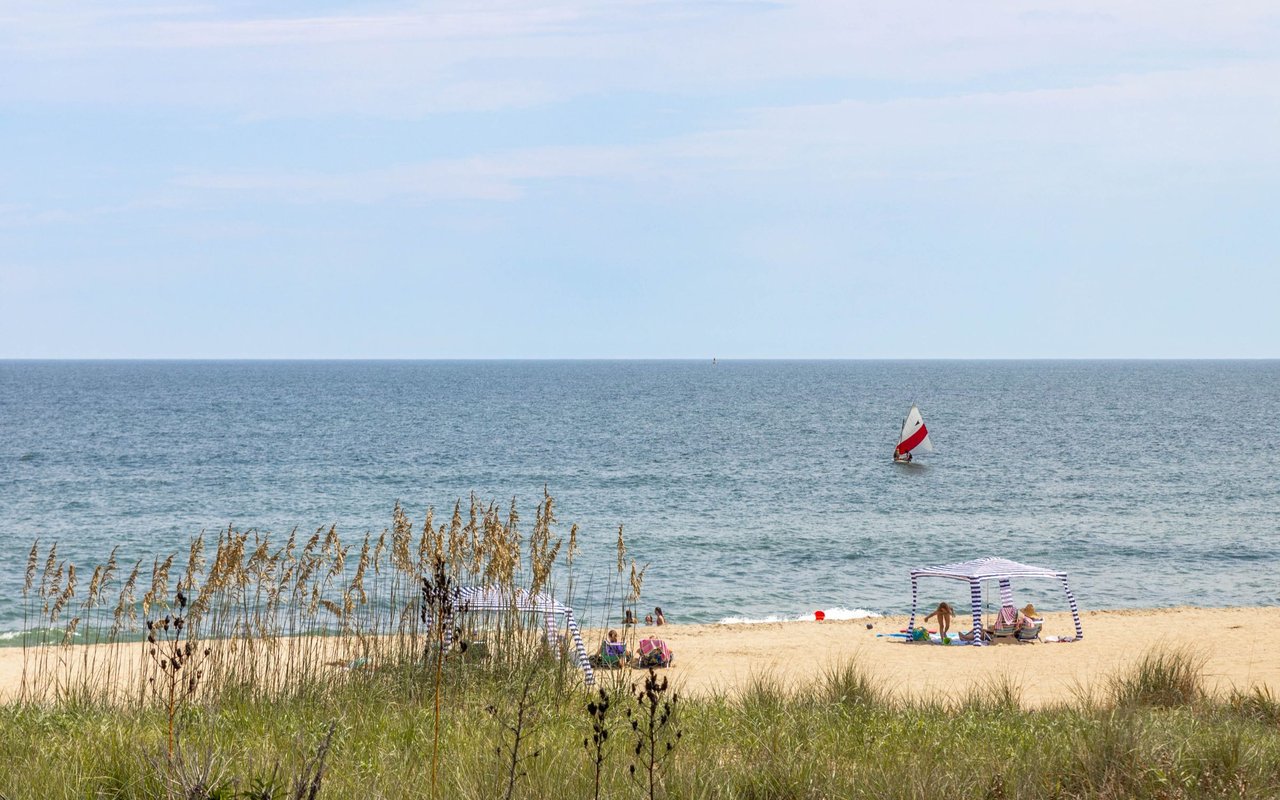
If you've been watching the horizon off Sandpiper Road for a hopper dredge, you can stop checking every morning. The next big sand refill for Sandbridge Beach is real, it's funded, and it's been in federal paperwork since last November. But the same document that confirms the project also rules out the exact window most people assume it will happen in.
That's the part worth sitting with. A November 2025 report by Dredging Today described the "next replenishment" as planned for the stretch between September 1 and November 14, 2026. Read on its own, that sounds like a start date. It isn't. The actual U.S. Army Corps of Engineers solicitation for the project, the Sandbridge Beach Erosion and Control and Hurricane Protection project, states the opposite: hopper dredging is prohibited during that exact window, September 1 through November 14, to protect sea turtles during their active season. The dates aren't a start window. They're a blackout window.
What the Federal Notice Actually Says
The Norfolk District's sources-sought notice, issued in November 2025, lays out the mechanics plainly. Once a contractor receives Notice to Proceed, work has to begin within 21 calendar days, and the full construction period runs about 276 days from that point, roughly nine months. Built into that same performance period is the September 1 to November 14 turtle restriction, meaning no hopper dredging can happen in that stretch no matter when the clock starts.
The project itself is substantial: about 2 million cubic yards of sand, pulled from Sandbridge shoal borrow site A and a southern borrow site a few miles offshore, in water ranging from 35 to 67 feet deep. That's placed along the same roughly 5-mile stretch of shoreline that's been renourished before, running between Dam Neck Fleet Training Center and Back Bay National Wildlife Refuge. None of that is new. What's new is the funding picture: this cycle is expected to draw a $22 million federal contribution, a bigger federal share than the last cycle saw.
The 2020 renourishment, by comparison, cost $20.3 to $20.6 million and was funded almost entirely through the Sandbridge Tax Increment Financing District and the Sandbridge Special Service District, local mechanisms, with only a few million in federal money layered in. That project was credited with preventing more than $140 million in storm damage. The jump toward a larger federal share this time doesn't change what residents will experience on the ground, but it does suggest this cycle cleared a different funding hurdle than the last one did.
Reading the 2020 Cycle Forward
Here's where the timeline math gets useful. Sandbridge's fills took place in 2003, 2007, 2013, and 2020. Using the 2020 fill and a 5-to-7-year cycle puts the next cycle in the 2025 to 2027 range, which lines up with the federal solicitation's late 2026 target. But "targeted for 2026" and "visible on the beach in 2026" are not the same claim, and the 2020 project is the clearest evidence of that gap.
A DVIDS report says equipment mobilization at Little Island Park began in early March 2020. Sand-borrow and placement operations didn't actually kick off until April 8. The contractor, Great Lakes Dredge & Dock, targeted a completion date of May 23. In other words, the visible, noisy, pipes-on-the-beach part of the last cycle happened entirely in spring, months after the fall and winter that preceded it.
If this cycle follows a similar shape, and the turtle restriction rules out any dredging before November 15 at the earliest, the realistic window for equipment to appear on Sandbridge's beach is late this year into next spring, not this September. A contractor could receive Notice to Proceed this fall and still spend the restricted window on mobilization, permitting, and staging before ever touching a hopper dredge in the water. As of this writing, no public contract award or confirmed start date has been announced for this cycle, so what's certain is the legal window, not the calendar.
What's Actually Happening in Sandbridge This Month
While the sand project sits in the paperwork stage, the neighborhood's actual September calendar is busy, and some of it shares the same ground the dredge project has used before.
- 47th Annual Sandbridge Pig Pickin', September 12, 2026, Little Island Park, 1 to 5 p.m. This is the same park where equipment for the 2020 renourishment staged before mobilizing to the beach. This year it hosts a fundraiser for the Sandbridge Volunteer Rescue Squad, which has served the community for nearly 50 years and uses proceeds to fund the advanced life-saving equipment behind more than 1,000 emergency calls a year.
- NAS Oceana Air Show, September 19 to 20, 2026. Two days of aerial demonstrations at Naval Air Station Oceana, close enough that residents along the beach will hear and see it overhead.
Neither of these depends on the sand project's timeline, and neither is disrupted by it. But the overlap at Little Island Park is a small, useful reminder that the park does double duty in this neighborhood, as both a community gathering spot and a staging ground for the kind of large infrastructure work that keeps the beach itself intact.
What This Means If You Live Here
The honest read on the federal paperwork is that the "late 2026" framing floating around isn't wrong so much as incomplete. The project is funded, scoped, and moving through the federal contracting process. What it can't do, by the terms of its own solicitation, is put a hopper dredge in the water before mid-November. If the last cycle is any guide, the actual sand placement, the part with visible equipment, staged pipe, and temporarily narrowed beach access, is more likely to show up in the colder months and stretch into next spring than to arrive this fall.
That's useful to know if you've been timing anything around this project, whether that's a fall beach walk, a family visit, or just wondering why the equipment you expected to see at Little Island Park hasn't shown up yet. It's also a small case study in how these projects get covered. The dates in a federal solicitation carry a lot of information, but only if you read what they're restricting, not just what they're naming.
For updates as the contract moves forward, the City of Virginia Beach's Public Works Department maintains its own beach replenishment page, which is the most direct way to track an actual award or start date once one is announced.
If you're weighing a move to Sandbridge, thinking about what your current home is worth in this market, or just want a straight answer about a piece of local news like this one, Sandbridge Life has been paying attention to this stretch of coastline for a long time. Get in touch anytime.