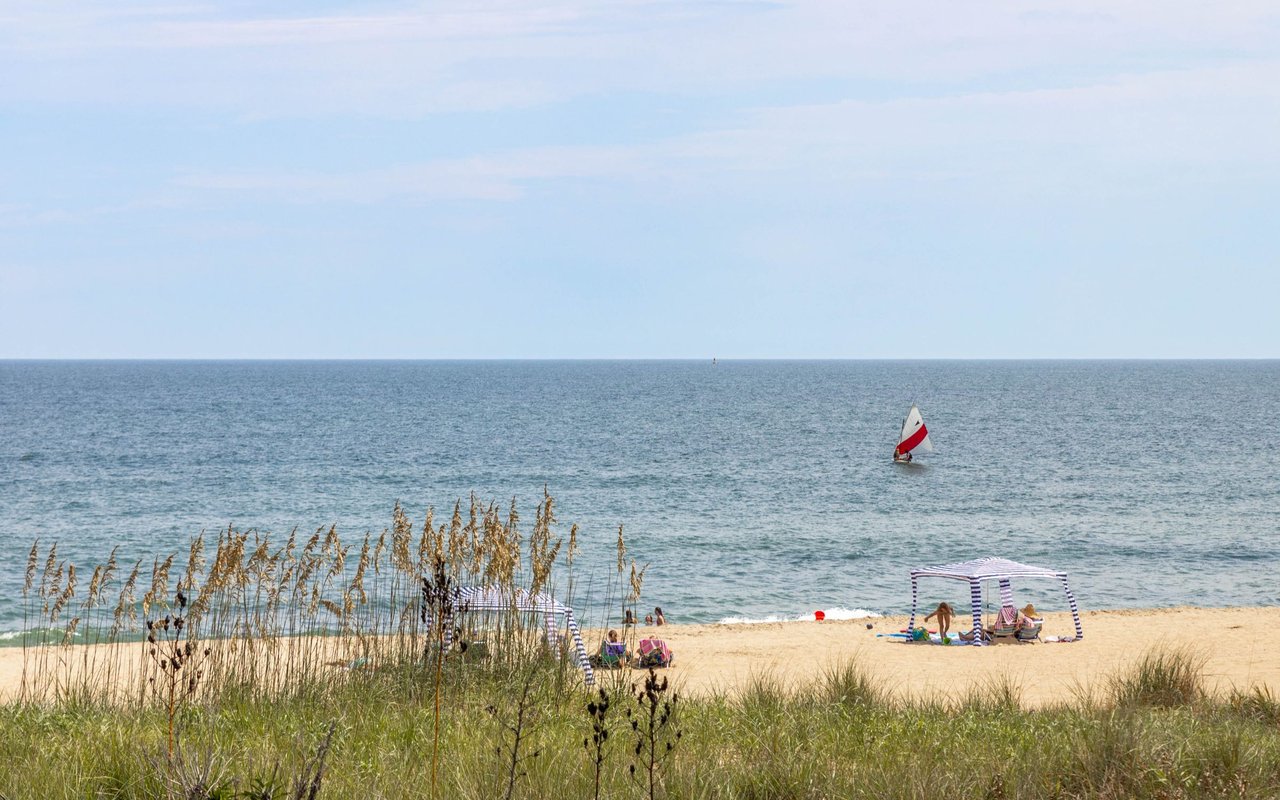
When buyers price out a home at Sandbridge Beach, they often expect a large "beach tax" on top of the usual property bill, since the beach here gets rebuilt every few years. For fiscal year 2026-27, that extra charge is one cent per $100 of assessed value. On a home assessed at $1 million, it comes to $100 a year. The citywide rate of $0.97 adds $9,700 on the same home.
That small number reflects 30 years of city budget decisions. The fund that maintains Sandbridge's shoreline now runs mostly on lodging taxes, and the city has cut what owners pay into it again and again. If you're comparing coastal markets, that shift tells you more about what owning here costs than any listing sheet does.
The line on the bill that pays for the beach
The charge comes from the Sandbridge Special Service District, or SSD. Each year Virginia Beach's real estate tax ordinance sets the district's rate. The FY2026-27 adopted operating budget sets it like this:
"There shall be levied and collected for fiscal year 2026 2027, taxes for the special purpose of providing beach and shoreline restoration and management at Sandbridge on all real estate within the Sandbridge Special Service District, not exempt from taxation, at the rate of one cent ($0.01) on each one hundred dollars ($100) of assessed value thereof."
The same ordinance says this rate is added to the general rate. Together they come to $0.98 per $100 inside the district. The city says the SSD pays for beach cleaning and provides pay-as-you-go money for Sandbridge projects in the coastal section of its Capital Improvement Program.
Where the other 97 percent comes from
Besides the real estate surcharge, the SSD keeps $1 of the $2 per-room-night hotel flat tax collected in Sandbridge. It also keeps 6.5 percentage points of the 9.5% hotel tax collected in the district. Here is how the money breaks down:
Sandbridge SSD revenue source | FY2024-25 actual | FY2026-27 adopted | Share of FY2026-27 |
|---|---|---|---|
Hotel tax | $6,107,873 | $6,110,040 | about 89% |
Real estate surcharge | $196,263 | $222,532 | about 3% |
Use of money and property | $553,834 | $553,000 | about 8% |
Total | $6,857,970 | $6,885,572 |
The FY2026-27 budget also sets aside $5,578,071 in the fund as a reserve for contingencies. That's an amount the city has approved to spend if needed, not a reported year-end balance. Still, it shows that most of the fund is held back for shoreline work rather than spent on cleaning each year.
People staying in Sandbridge generate most of the money that maintains Sandbridge's beach. It wasn't always this way.
Three cuts in four budgets
When Sandbridge first set up dedicated beach funding, owners carried six times today's surcharge. Each later cut followed the same reasoning: lodging revenue was strong enough to cover it.
- November 1994. City Council created the Sandbridge SSD with a surcharge of 6¢ per $100. This followed the federal government's 1992 decision to include Sandbridge in its sand replenishment projects, which required the city to share the cost.
- December 1, 1998. Council created the Sandbridge Tax Increment Financing district, or TIF. It froze the district's assessed value at $206.1 million and sent the taxes on any growth above that base into a separate fund set aside for beach work.
- February 2020. The Virginian-Pilot described that year's replenishment as funded by Sandbridge property owners paying six cents above the regular rate.
- FY2020-21. Council dissolved the TIF and cut the surcharge from 6¢ to 4¢. The city said lodging revenue made the cut possible "without impacting the beach replenishment schedule."
- FY2022-23. The budget reconciliation letter cut the rate by another 2¢. It cited healthy hotel tax revenue and said the cut would not affect the replenishment cycle.
- FY2023-24. One more cent came off, which reduced SSD real estate revenue by $172,973. The FY2023-24 reconciliation letter gave two reasons: "the healthy performance of lodging tax revenues dedicated to the fund" and an expected $22.2 million federal share for the next replenishment.
The same 2023 letter said the city expected to keep "the current practice of having two replenishments fully funded." In other words, the city cut the owner rate while still promising money for two future sand refills. It could only do that because lodging taxes were bringing in more than the beach needed.
What the TIF's ending says about Sandbridge values
The TIF is the part of this story most buyers have never heard of, and it says a lot about how the area grew. When the city dissolved it, budget staff reported that assessments in the district had grown 540% since 1998, to $1.32 billion. They credited much of that growth to new sanitary sewer service, the regular sand replenishment cycle, and the beach maintenance crew paid for by the SSD.
Rising values brought in more money than the beach needed. A 2020 City Auditor report found that $112.1 million in surplus was moved to the city's General Fund from 2006 to 2019. City analysis showed the TIF produced $7 million to $9 million a year beyond what replenishment required.
The ordinance that ended the TIF was titled "An Ordinance to Dissolve the Sandbridge Tax Increment Financing Fund and Transfer Lapsed Funds to the General Fund." Since then, the budget says the taxes on that value growth "are no longer earmarked specifically for Sandbridge."
Owners never paid a higher rate because of the TIF. The city's own explanation says TIF owners pay the same rate as everyone else in the city. What changed in 2020 is where that money goes. Sandbridge owners still pay the full citywide rate on their home's value, but only the one-cent surcharge is now set aside for the beach. Most of the rest of the local beach money comes from people staying in Sandbridge, with investment and property income making up the remainder.
The next refill has bids in hand
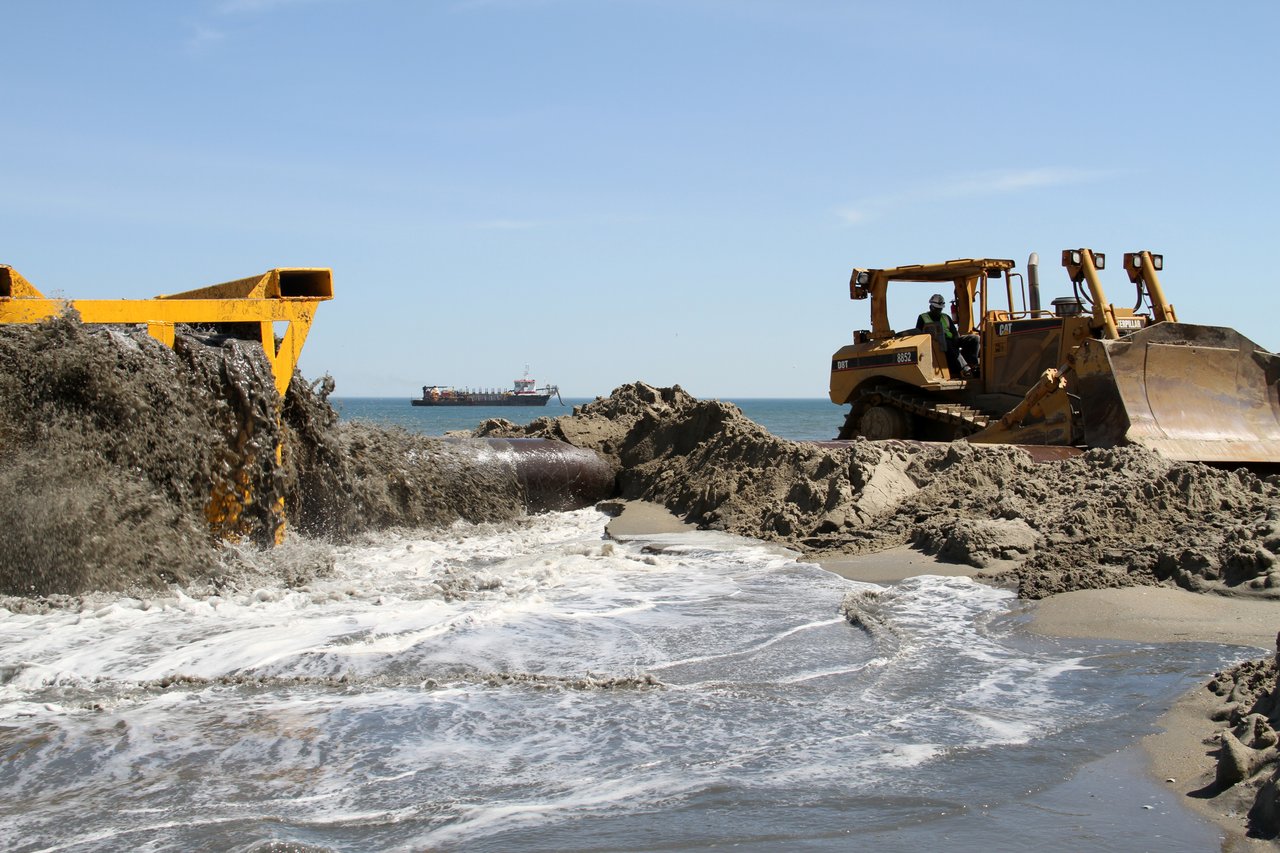
The city's beach replenishment page lists Sandbridge's next replenishment as planned for late 2026, with an expected $22 million federal contribution. The last replenishment, in 2020, cost $20.6 million and was paid for with TIF and SSD funds.
The federal side is now in procurement. The U.S. Army Corps of Engineers' Norfolk District posted solicitation W9123626BA011 on August 31, 2026, with offers due October 2. On October 6 it added a signed abstract of the bids. The project covers both Sandbridge Beach and Dam Neck. Three firms bid: Hireldabor, Great Lakes Dredge & Dock Company, and Weeks Marine. Evaluated totals ranged from about $35.7 million to about $44 million. The priced items include sea turtle response, turtle trawling and relocation, and two optional rounds of dredging and beach fill.
As of mid-October 2026, no award has been announced, and no final total cost or federal/local split has been confirmed. The $22 million federal figure is the city's expectation, not a settled number. The bids also cover Dam Neck, so they don't show what Sandbridge alone will cost.
What this means if you're comparing coastal markets
For a buyer, the beach adds very little to the yearly cost of owning in Sandbridge: $10 per $100,000 of assessed value in FY2026-27. What matters more is what the beach's funding depends on. It relies on lodging tax revenue and federal cost-sharing. Since 2020, the city has pointed to both as its reasons to cut owner rates and still fund future replenishments.
That makes the city budget worth following. Council sets the SSD rate every spring in the real estate tax ordinance. Every change so far has gone down, each time with a stated reason about lodging revenue or federal money. If either of those changed, the budget documents are where it would show first.
This is general information about how a local tax works, not legal, tax or financial advice. Please confirm how it applies to your property with the city or a qualified professional.
A few questions buyers ask
Does the SSD rate apply to every Sandbridge-area address?
The ordinance applies the one-cent rate to taxable real estate within the Sandbridge Special Service District. Check the specific parcel's tax record rather than assuming a nearby street, including in Sandbridge Shores, falls inside the boundary.
Does the SSD pay for canal dredging?
The SSD is set up for beach cleaning and Sandbridge shoreline projects. Virginia Beach handles neighborhood channels through a separate Neighborhood Dredging Special Service District program, where at least 80% of owners must agree to a separate surcharge. The city lists eight participating neighborhoods, and none of them are in Sandbridge.
Is the one-cent rate locked in?
No. Council sets the rate each fiscal year in the budget ordinance. It has been one cent since FY2023-24.
If you're weighing a Sandbridge purchase and want to understand what your carrying costs actually include, from the SSD line on the tax bill to where the next replenishment stands, the team at Sandbridge Life follows these details closely and is glad to walk through them with you. Get in Touch.